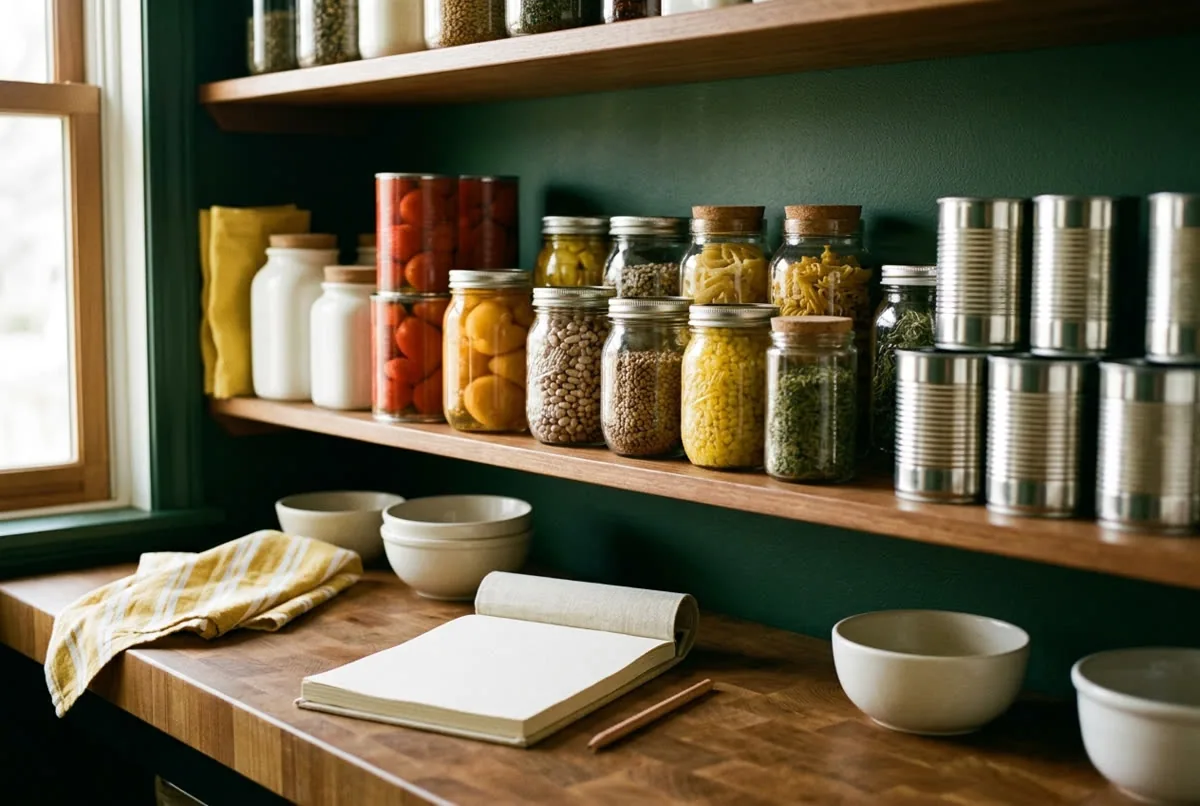
Groceries are where inflation feels the most personal. The cart looks the same as last year, the total does not, and the shock at the register can make a careful budget feel pointless. It is not pointless, and you are not doing anything wrong. Food prices are largely out of your control (USDA ERS), but two common leaks in grocery budgets, impulse buys and wasted food, are almost entirely inside it. Close those, swap smart, and you can hold your spending even while prices climb. Here is the plan.
The short answer: Set a weekly grocery number from your real receipts, then protect it. Shop your pantry and freezer before buying anything new, plan the week and shop from one short list, swap the most inflated items for cheaper staples and store brands, and keep a running total so you know where you stand before the register. Same meals, lower bill, no shame.
This guide lives in our recession-proof money library, because a grocery bill is one of the largest flexible costs a household controls, which makes it one of the best places to defend a tight budget.
Step 1: Set a real weekly grocery number
You cannot hold a budget you never set. Pull up the last month of grocery spending, the honest total including the “quick trips” that never feel like real shopping, and see what you actually spend (Consumer.gov). Divide by the weeks, and there is your current baseline. Now set a weekly target just below it, not a fantasy number that only works if nothing goes wrong.
The reason this matters: a grocery budget copied from a headline or a stranger’s blog almost always collapses, because it ignores your household, your area, and your real habits. A number built from your own receipts, tightened gradually, is one you can actually keep. And to be clear, that number is a spending target you steer toward, not a rule to feel guilty about missing by a few dollars.
Step 2: Shop your pantry and freezer first
Before you write a single item on a list, look at what you already own (EPA). Many kitchens are quietly holding more meals than you would guess: the pasta behind the cans, the bag of rice, the chicken in the back of the freezer, the half-used jars in the door. Eating that food down is the fastest possible way to cut a bill, because you already paid for it, and every meal you build from it is a meal you do not buy again.
Make it a habit to open the freezer and the pantry and ask what needs using before you plan anything new. Running a focused version of this for a full week is its own money-saving reset, and our pantry-challenge week walks through how to do it without ending up eating oddities for dinner.
Step 3: Plan the week around one short list
Meal planning has a reputation for being fussy, but the money-saving version is simple: decide roughly what you will eat this week, write one list from that plan, and buy only what is on it (EPA). That single habit shuts down two common grocery leaks at once. Impulse buys lose their opening because you are shopping a list, not browsing. Food waste drops because you buy what you will actually cook, not hopeful extras that rot in the drawer.
It does not need to be elaborate. Seven dinners pinned to the fridge, built partly from what Step 2 turned up, does most of the work. If you want a repeatable routine, our guide on how to meal plan a full week on a tight grocery budget lays out a system you can run every Sunday in fifteen minutes.
Want the tools that make this stick? Grab our free budget guide, so your grocery number lives on paper where you can actually defend it.
Step 4: Swap toward cheaper staples, not fewer meals
Inflation-proofing is not about eating less; it is about spending less for the same table. The move is to swap the most inflated items for cheaper equivalents while keeping the meal count exactly the same:
- Protein: rotate in eggs, beans, lentils, canned fish, and cheaper cuts alongside pricier meat. You keep protein on the plate at a lower cost per meal.
- Store brands: trade name brands for private-label staples like canned goods, rice, pasta, flour, and frozen vegetables.
- Produce: lean on what is in season and on frozen vegetables, which are cheap, keep for months, and waste nothing.
- Scratch over convenience: a bag of oats, a sack of potatoes, and a pot of dried beans stretch remarkably far compared with their pre-made versions.
None of these cut a meal. They lower the total quietly, which is exactly the point. Keep the swaps that work for your family and switch any that do not back, one item at a time.
Step 5: Track the total and adjust each week
The register should never be a surprise. Keep a running tally as you shop, on your phone or a scrap of paper, so you know before you reach the checkout whether you are on target. Just seeing the number climb in real time nudges you to put the unplanned item back, which is often the difference between hitting your budget and sailing past it.
Then take two minutes at the end of the week to review. What went over, what swap worked, what to repeat. Groceries are a moving target as prices shift and seasons change, so a small weekly adjustment keeps the whole system honest without turning it into a chore. Our grocery budget reset is a good deeper dive if a week gets away from you and you want a clean restart.
Hold the line without cutting the table
Inflation makes groceries feel like a losing fight, but the parts you control are the parts that move the number most. Set a real weekly target, shop what you already own, plan around one short list, swap toward cheaper staples, and watch the total as you go. You keep the same meals on the table and hand less of your budget to rising prices, which is the whole idea of inflation-proofing. One caution while the squeeze is on: cheap “income system” offers get more tempting when groceries hurt.
This is education, not personal financial advice, so adapt it to your household. Grab our free budget guide to make a grocery number easy to hold, then browse the recession-proof money library for more calm ways to defend your budget this fall.
What a Tighter Grocery List Is Worth Over Time (Illustration, Not Advice)
Say swapping toward cheaper staples and shopping one real list instead of drifting the aisles frees up $45 a month. Held at a flat, generic 4%/year rate, purely for arithmetic, that’s roughly $2,983 after five years on $2,700 actually set aside.
This is an illustration of opportunity cost, not advice: a flat, generic rate used for arithmetic only. It is not a forecast, and not a recommendation of any investment, product, platform, or timing. Your results will vary.
Frequently Asked Questions
- How do I lower my grocery bill without cutting meals?
- Start by using what you already own. Many kitchens hold more meals than you would guess hiding in the pantry and freezer, and eating those down cuts the bill without cutting a single meal. From there, plan the week and shop from one list so nothing extra sneaks into the cart, and swap the most expensive items for cheaper proteins, produce, and store brands. The goal is the same number of dinners for less money, which is a spending target you set, not a promise of any particular result. Match it to your own household.
- What is a realistic grocery budget for a family right now?
- There is no single right number, because it depends on household size, where you live, and dietary needs, so the honest answer is to build yours from your own receipts rather than a headline figure. Look at what you truly spent over the last month, then set a weekly target slightly below that and tighten gradually. A budget anchored to your real habits is one you can actually hold, while a number copied from someone else's life usually collapses in the first week. Treat the figure as a target to steer toward, not a rule to feel bad about.
- Are store brands really cheaper than name brands?
- Often, yes. Store brands, sometimes called private label, are usually priced below the national name brand, and pantry staples like canned goods, rice, pasta, flour, and frozen vegetables are an easy place to test the swap. Trying the store-brand version of your regular items is one of the lowest-effort ways to lower a bill, because you keep the same meals and simply pay less for the same ingredients. When one does not measure up, switch just that item back.
- Does meal planning actually save money on groceries?
- It is one of the most reliable ways to spend less, because it attacks two common leaks at once: impulse buys and wasted food. When you plan the week and shop from one list built from that plan, you buy what you will actually use and skip the extras that call to you in the aisles. You also throw away less, which is money you already spent going straight into the trash. The plan does not need to be elaborate; even a rough seven-dinner list pinned to the fridge does most of the work.
Sources & references
Before you go
The Already-Done Budget: Pre-Filled Starting Numbers for a Real Household Budget
A budget that starts filled in: 13 categories with realistic starting percentages from the 50/30/20 rule, pre-computed dollar amounts by income, and a worksheet to swap in your real numbers.
Free guide
The Already-Done Budget: Pre-Filled Starting Numbers for a Real Household Budget
A budget that starts filled in: 13 categories with realistic starting percentages from the 50/30/20 rule, pre-computed dollar amounts by income, and a worksheet to swap in your real numbers.