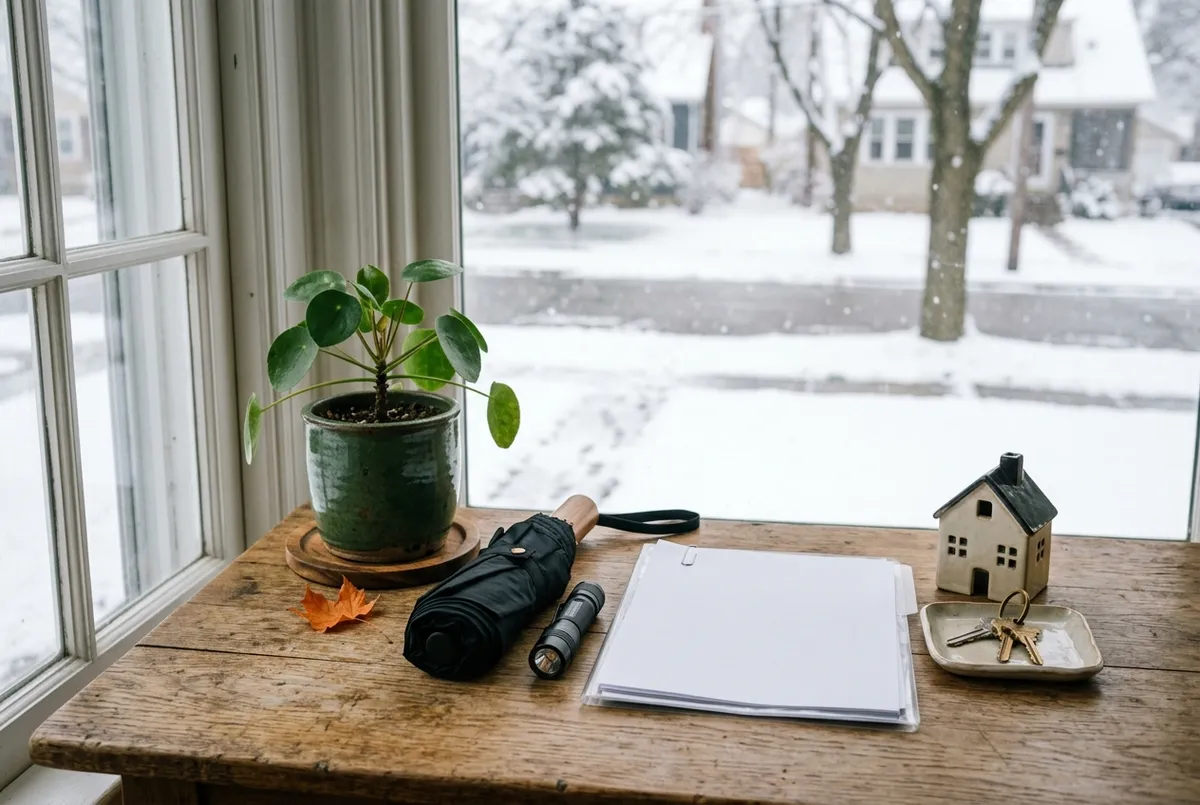
The forecast just flipped from rain to snow, and the radiator in your apartment is doing its usual half-hearted job against the cold. You’ve never actually read your renters insurance policy start to finish, and now you’re wondering whether a frozen pipe two units over becomes your problem or your landlord’s. Before the first hard freeze hits, it’s worth knowing exactly what your policy covers, and exactly where that coverage stops.
The short answer: A standard renters insurance policy generally covers your personal belongings if a pipe bursts from freezing, along with wind damage. Whether it pays for belongings damaged by an ice-dam leak depends on your policy’s wording, so check it. It will not cover flood damage on its own, and an insurer can deny a burst-pipe claim if you didn’t take basic steps to prevent the freeze.
The Pattern: Checking Your Policy After the Damage, Not Before
Many renters buy a policy once at move-in, file the confirmation email away, and never open it again until something goes wrong. That’s the pattern worth naming here: insurance gets treated like a box to check, not a document to actually read. The problem is that renters insurance splits responsibility in a specific way, between what your policy protects and what your landlord’s policy protects. If you don’t know that split before a storm, you find out the hard way while you’re standing in a wet apartment trying to figure out which insurer to call.
Here’s the plain version of that split. Homeowners policies generally cover a “sudden and accidental” discharge from a plumbing system, like a pipe that bursts because it froze (NAIC, accessed 2026-09-07). But a renters policy only covers your belongings: the couch, the laptop, the winter coats in the closet. Damage to the building itself, the walls, ceiling, or floors, is generally the landlord’s property insurance responsibility, not yours (Insurance Information Institute). Two different policies, two different jobs. Knowing that before the storm means you’re not stuck guessing during the claim.
What Your Renters Policy Actually Protects
It helps to think of your renters policy as covering one thing: everything you’d have to repurchase if the apartment burned down or flooded tomorrow. That’s your furniture, your electronics, your clothes, your kitchen gear, the things you own and would have to replace out of pocket. It is not the structure around those things. The drywall, the subfloor, the plumbing lines inside the walls, the roof over your head, none of that is yours to insure. It belongs to the landlord, and it’s the landlord’s policy that’s supposed to cover it.
That distinction matters most in a winter storm scenario specifically because water damage tends to hit both categories at once. A pipe bursts, your belongings get soaked, and the ceiling below gets a water stain. Two different policies respond to two different parts of that same event. Your renters policy is the one you actually control, which is exactly why it’s worth confirming what’s in it before the cold weather arrives rather than during the cleanup.
Winter is the season this split gets tested the most. Summer storms bring wind and occasional roof leaks, but freezing temperatures create a specific kind of risk: pipes that sit in exterior walls, in unheated closets, or near drafty windows are the ones most likely to freeze solid and then split open once the ice inside expands. Insurers look closely at freeze losses: if the insurance company determines you neglected your plumbing system by not taking preventive measures to avoid freezing, the damage from a burst pipe may not be covered (NAIC, accessed 2026-09-07).
Does Renters Insurance Cover Frozen or Burst Pipes?
Generally, yes, with a catch. Standard renters insurance covers winter weather damage, such as burst pipes, to your personal possessions (Insurance Information Institute, 2024). If a pipe in your unit freezes and bursts, ruining your mattress or your bookshelf, that’s the kind of loss the policy is built to respond to.
The catch is the word “reasonable.” Insurers can deny a burst-pipe claim if you didn’t take reasonable steps to prevent the freeze in the first place, things like keeping the unit heated to some minimum, steady temperature or shutting off the water if the apartment sits vacant for a stretch (NAIC, accessed 2026-09-07). NAIC’s guidance is written for homeowners policies, so look for similar wording in your renters policy. If you’re heading out of town over a holiday week in January and you turn the heat off entirely to save on the utility bill, that decision could cost you the claim later. Leaving the thermostat at a steady setting, at least 65 degrees per Triple-I’s guidance, is the cheaper bet (Insurance Information Institute), and it’s worth confirming your specific policy’s language on this before you travel.
Who Pays for Water Damage in an Apartment: You or Your Landlord’s Insurance?
It depends on what got damaged, not on whose fault the freeze was. If a pipe bursts and ruins your belongings, your renters policy is the one that responds. If the same burst pipe damages the structure itself, the drywall, the flooring, the ceiling below, that typically falls under your landlord’s property insurance, not yours (Insurance Information Institute).
This is a split many renters get wrong. A lot of people assume the landlord’s policy is a blanket that covers everyone and everything inside the building, so they skip buying their own coverage. It isn’t a blanket. The landlord’s policy protects the landlord’s asset, the building. Your renters policy protects your asset, your stuff. If you skip the renters policy because “the building is insured anyway,” you’re the one left paying to replace a soaked mattress and water-damaged electronics entirely out of pocket, on top of whatever your landlord’s insurer decides about the structural repair.
Does Renters Insurance Cover Snow or Ice Damage?
Some of it, yes. Standard homeowners policies cover water damage when ice forms in gutters and backs water up under roof shingles and into the house (Insurance Information Institute), and standard renters policies cover winter weather damage to your possessions (Insurance Information Institute, 2024). An ice dam happens when snow melts, refreezes at the roof’s edge, and backs water up under the shingles. If that water works its way down into your unit and ruins your belongings, whether your policy pays depends on its wording, so confirm that before winter.
What it isn’t designed to help with is snow load damage to the roof or building structure itself, that follows the same structure-versus-contents split covered above and generally sits with the landlord’s building insurance. Your policy’s job starts and ends with what’s yours: the property inside your unit, not the building holding it up.
Do You Need a Separate Policy for Flood Damage as a Renter?
Yes, generally. Most renters insurance policies do not cover flood damage; that requires a separate flood policy, such as one from the National Flood Insurance Program (Insurance Information Institute). This one is easy to miss because “water damage” sounds like a single category, but insurers draw a hard line between water that originates inside your building, like a burst pipe, and water that comes from outside and rises, like a flood. The first is typically covered under a standard policy. The second usually isn’t, without a separate policy layered on top.
If your apartment sits on a ground floor, near a storm drain, or in an area that’s flooded before, this is worth a direct question to your insurance provider rather than an assumption in either direction. A five-minute call now is cheaper than finding out the answer during a claim.
Two Winter Insurance Myths Worth Retiring
“My landlord’s insurance covers my stuff if a pipe bursts.” It doesn’t. The landlord’s policy is built to protect the building’s structure. Your own belongings are only protected if you carry your own renters policy (Insurance Information Institute).
“Any pipe-freeze damage is automatically covered.” Not always. Insurers can deny a claim if you didn’t take reasonable preventive steps, keeping the unit heated, shutting off water if it’s vacant, before the freeze happened (NAIC, accessed 2026-09-07).
Both of these misconceptions share the same root: they let you skip actually reading your policy. Neither one holds up once you do.
Simple Steps Before the First Freeze
None of these require a policy change, just a few minutes of attention before the cold sets in:
- Read the water-damage and personal-property sections of your actual policy, not a generic summary. Confirm your deductible and any minimum-heat clause.
- Keep the thermostat on a steady setting, at least 65 degrees, instead of off, especially if you travel during the coldest stretch of winter.
- Know the location of your unit’s main water shutoff, in case a pipe does start leaking before it fully bursts.
- Ask your landlord, in writing, what their building policy covers versus what falls to you as the tenant.
- Photograph your belongings now, before any damage, so a claim has something to compare against later.
The One Thing to Do This Week
NAIC’s own guidance is blunt about this: review your homeowners or renters coverage to make sure winter weather damage is covered by your policy (NAIC, accessed 2026-09-07). So this week, before the first freeze warning shows up on your phone, pull up your renters policy and read the sections on water damage and personal property. Confirm what your deductible actually is, confirm whether there’s a minimum-heat requirement written into the fine print, and confirm what your insurer would call “reasonable steps” in your specific contract. That’s a twenty-minute task now instead of a stressful phone call later.
If you don’t have renters insurance yet, or you’re not sure your deductible is something you could actually cover out of pocket tonight if a pipe burst, that’s worth fixing before winter, not during it. Building a small deductible cushion works the same way as any other savings goal: pick a system, start small, and let it add up over the weeks before the cold really sets in. A structured approach like the 100-Envelope Challenge or the 52-Week Money Challenge can build that kind of buffer without touching your regular budget. Your results will vary depending on your starting point and how consistently you stick with it, but having even a small deductible fund set aside turns a burst pipe into an inconvenience instead of an emergency.
Frequently Asked Questions
- Does renters insurance cover frozen or burst pipes?
- Generally yes, for your belongings. Standard renters insurance covers winter weather damage, such as burst pipes, to your personal possessions. Insurers can still deny the claim if you didn't take reasonable steps, like keeping the unit heated, to prevent the freeze.
- Who pays for water damage in an apartment, me or my landlord's insurance?
- It depends on what was damaged. Your renters policy covers your personal belongings. Damage to the building's structure, like walls, ceilings, or floors, is generally the landlord's property insurance responsibility.
- Does renters insurance cover snow or ice damage?
- Standard homeowners policies generally cover water from ice dams that backs up under roof shingles and into the house, and standard renters policies cover winter weather damage to your personal possessions. Damage to the building's roof or structure itself typically falls to the landlord's policy.
- Do I need a separate policy for flood damage as a renter?
- Yes, generally. Most renters insurance policies do not cover flood damage; that requires a separate flood policy on top of your standard renters coverage.
Sources & references
- NAIC, Will my homeowners policy cover water damage from a burst pipe? (opens in new tab)
- NAIC, How can I protect my home from winter weather? (opens in new tab)
- Insurance Information Institute, Renters insurance (opens in new tab)
- Insurance Information Institute, Mitigation reduces winter weather risks (2024) (opens in new tab)
- Insurance Information Institute, Surviving severe cold weather (opens in new tab)
Before you go
The Already-Done Budget: Pre-Filled Starting Numbers for a Real Household Budget
A budget that starts filled in: 13 categories with realistic starting percentages from the 50/30/20 rule, pre-computed dollar amounts by income, and a worksheet to swap in your real numbers.
Free guide
The Already-Done Budget: Pre-Filled Starting Numbers for a Real Household Budget
A budget that starts filled in: 13 categories with realistic starting percentages from the 50/30/20 rule, pre-computed dollar amounts by income, and a worksheet to swap in your real numbers.