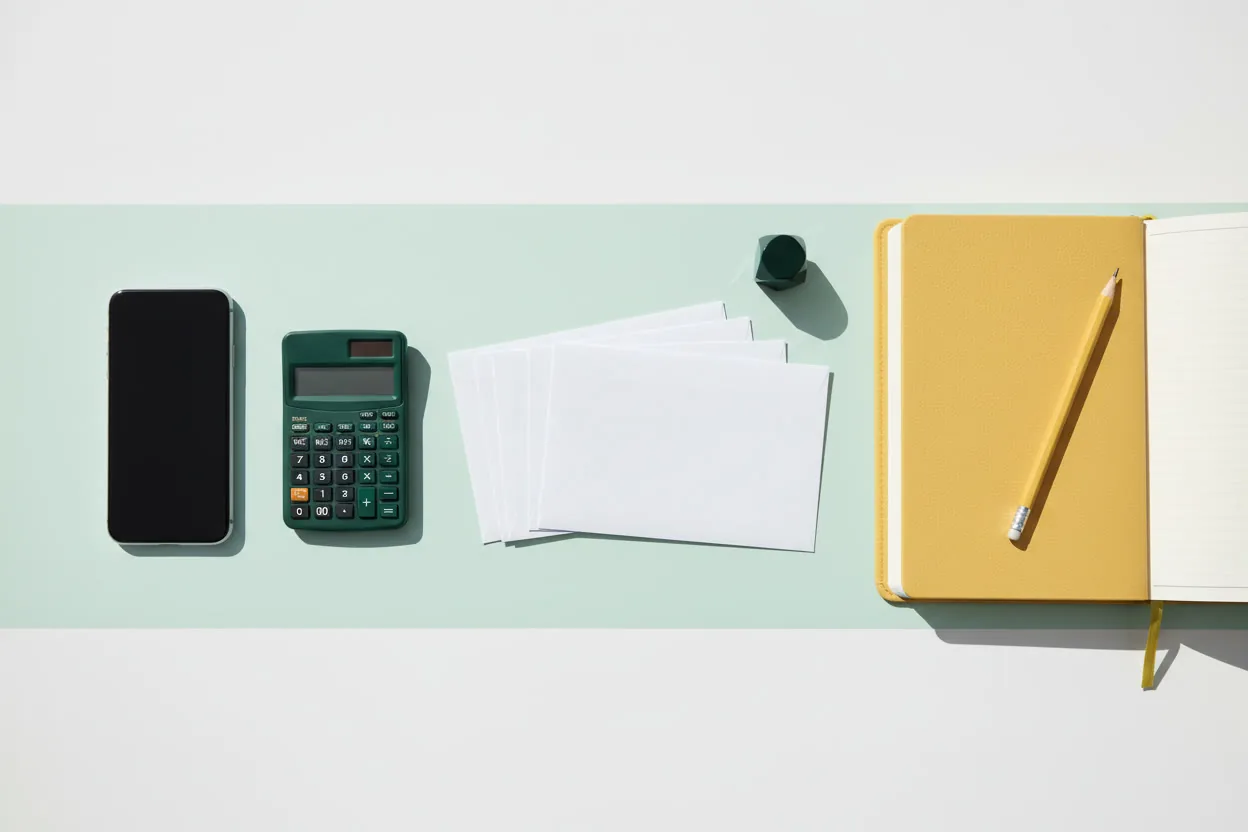
Half your Pinterest feed is stuffing crisp bills into a zippered binder. The other half is screenshotting a budgeting app dashboard with every category sitting green. Both camps are loud about which method actually works, and lately a third answer keeps showing up in the comments under both kinds of posts: just do some of each. Here’s the honest cash stuffing vs digital budgeting comparison, and why hybrid setups are turning up more often in how people talk about the choice, not because either original method broke.
The short answer: Cash stuffing, spending money kept in labeled envelopes or a binder, gives you a hard limit that’s nearly impossible to argue your way past. Digital budgeting, an app, a bank’s spending tracker, or a spreadsheet, gives you automatic tracking and a full picture of every dollar, cash or card. Neither one does the other’s job well. A hybrid setup, cash for the categories that leak and digital for everything else, is the pattern more 2026 budgeting commentary keeps landing on, though it’s worth treating as a trend worth trying, not a verdict.
Cash stuffing, digital budgeting, and hybrid, side by side
| Cash stuffing | Digital budgeting | Hybrid | |
|---|---|---|---|
| Upfront cost | About $9-$16 for a binder | Free to roughly $15/month | Binder cost, plus a free or paid app |
| Overspending brake | Hard: the cash runs out | Soft: an alert you can dismiss | Hard on leak categories, soft elsewhere |
| Tracks card and online spending | No | Yes, automatically | Yes, for everything not held in cash |
| Setup effort | Low: label pockets, stuff cash | Medium: link accounts, build categories | Medium: both systems running side by side |
| Needs internet or a bank link | No | Yes | Only for the digital half |
| Best at | Stopping flexible-category overspending | Showing the whole financial picture | Doing both, on the categories that need it |
Nobody wins every row on that table, and that’s the whole reason this comparison keeps producing a third column instead of a clean winner.
Cash stuffing: the hard stop
Cash stuffing means moving your flexible spending, groceries, eating out, fun money, into labeled envelopes or a binder’s clear pockets, then spending only what’s inside. Our full cash envelope system guide and the trend-forward cash stuffing for beginners walkthrough both cover setup in detail, so here’s the short version: it works because handing over a real bill registers as a loss in a way a tap on a screen doesn’t (PubMed), and once a pocket is empty, that category is closed until next month. There’s no arguing with zero.
Where it falls short is anything that isn’t cash. Bills, subscriptions, online orders, and pay-at-pump gas all slide right past a binder untouched. It also asks a real habit of you, withdrawing and stuffing on every payday, and it means keeping spending cash, never savings, somewhere in your home.
A binder built for exactly this job keeps the bills flat and the pockets from tearing, and it travels in a bag without spilling your grocery money across the car. The offer button below has the current listing for the Sooez Cash Envelope Kit if you’d rather start with a ready-made one than cut up paper envelopes yourself.
Digital budgeting: the full picture
Digital budgeting covers a lot of ground: a free banking app’s spending breakdown, a paid zero-based budgeting app, or a plain spreadsheet you update by hand. What they share is reach. They catch every transaction, card or transfer, without you writing anything down, and most surface trends a binder never will, how this month compares to last, which subscription quietly crept up, where the real leak actually is.
The tradeoff is the brake. Most digital tools stop at a notification, and a notification is easy to swipe away mid-scroll. Good apps also cost something, commonly $8 to $15 a month for the popular envelope-style and zero-based options (YNAB), which is a real expense for a tool meant to help you spend less. And every version, app or spreadsheet, requires either linking accounts or manually keeping the numbers current, so the whole system goes quiet the first week you stop opening it.
Hybrid: the pattern that keeps showing up
Neither camp is wrong, exactly, they’re each solving half the problem, and that seems to be the case more budgeting content has been making through 2026. Follow “cash stuffing” and “digital budgeting” in the same conversation now and you’re about as likely to land on a hybrid setup as a strict pick-one take. That’s not proof hybrid beats both methods outright, plenty of people run pure cash or a pure app for years and do fine, but it’s a pattern worth naming: the framing is shifting from “which one” to “which parts of each.”
In practice, the hybrid version is simple. Run cash only for the two or three categories where you actually overspend, usually groceries, eating out, and fun money, and leave the rest, bills, gas, subscriptions, on a card tracked by an app or a spreadsheet. The app supplies the dashboard and the whole-picture view; the envelopes put a physical wall around the exact spots that leak. Our cash envelope system guide walks through three specific hybrid setups, a dedicated spending account, paper-tracked digital envelopes, and cash-for-leaks-only, if you want to go deeper than the concept here.
Pick this if…
- Pick cash stuffing if you overspend mainly on cards, you want a limit nothing can talk you out of, and your leak categories are mostly in-person purchases.
- Pick digital budgeting if your spending already runs mostly online or on card, you want automatic tracking and trend data, and a monthly fee, or the time for a spreadsheet, doesn’t bother you.
- Pick hybrid if you’ve already tried one and it only fixed half the problem, or you want an app’s full picture without giving every category a soft “just this once” pass.
Where to start either way
Whichever column you land in, the categories and dollar amounts should come from an actual budget, not a guess. Our free budget guide can help, so your envelope amounts, or your app’s categories, are set with real numbers before you touch cash or a login screen. Grab the free budget guide and build the numbers first.
If you want the deeper binder-versus-app breakdown with its own side-by-side table, our budget binder vs budgeting app comparison covers that specific matchup start to finish. And for more ways to make a budget survive real life, the budgeting basics library has the rest.
Frequently Asked Questions
- What's the real difference between cash stuffing and digital budgeting?
- Cash stuffing caps spending physically: once an envelope or binder pocket is empty, that category is closed, full stop. Digital budgeting tracks spending automatically across every card and account and shows trends a binder never will, but its overspending limit is usually just an alert you can dismiss. One enforces a hard stop, the other gives you a complete, searchable record. Most people are really trying to solve one of those two problems, so match the tool to the one you actually have.
- Is hybrid budgeting actually better, or is that just a trend?
- Call it an observed pattern, not a proven rule. More budgeting creators and finance writers have framed hybrid setups as the practical middle ground through 2026, but that reflects how the conversation is shifting, not a study proving hybrid outperforms either method alone. Plenty of people do fine running pure cash or a pure app for years. Hybrid is worth trying when picking one side has already left half your spending unaddressed, not because anyone has declared it the winner.
- Which categories should stay cash in a hybrid system?
- The two or three that actually leak, usually groceries, eating out, and fun money. Anything with a fixed amount or a predictable due date, rent, utilities, insurance, subscriptions, works fine on autopay tracked by an app or a bank statement, since there's no willpower involved in a bill that doesn't change month to month.
- Do I need to buy a binder, or can I use paper envelopes for the cash side?
- Paper envelopes work and cost almost nothing. A binder kit just adds durability, pre-printed labels, and a zip closure so nothing spills or tears in a bag. If you're only testing whether cash stuffing is a habit you'll keep, start with envelopes from a kitchen drawer and upgrade to a binder once you know you'll still be using it next month.
Sources & references
Before you go
The Already-Done Budget: Pre-Filled Starting Numbers for a Real Household Budget
A budget that starts filled in: 13 categories with realistic starting percentages from the 50/30/20 rule, pre-computed dollar amounts by income, and a worksheet to swap in your real numbers.
Free guide
The Already-Done Budget: Pre-Filled Starting Numbers for a Real Household Budget
A budget that starts filled in: 13 categories with realistic starting percentages from the 50/30/20 rule, pre-computed dollar amounts by income, and a worksheet to swap in your real numbers.